
How to Recognize Early Signs of Autism in Toddlers
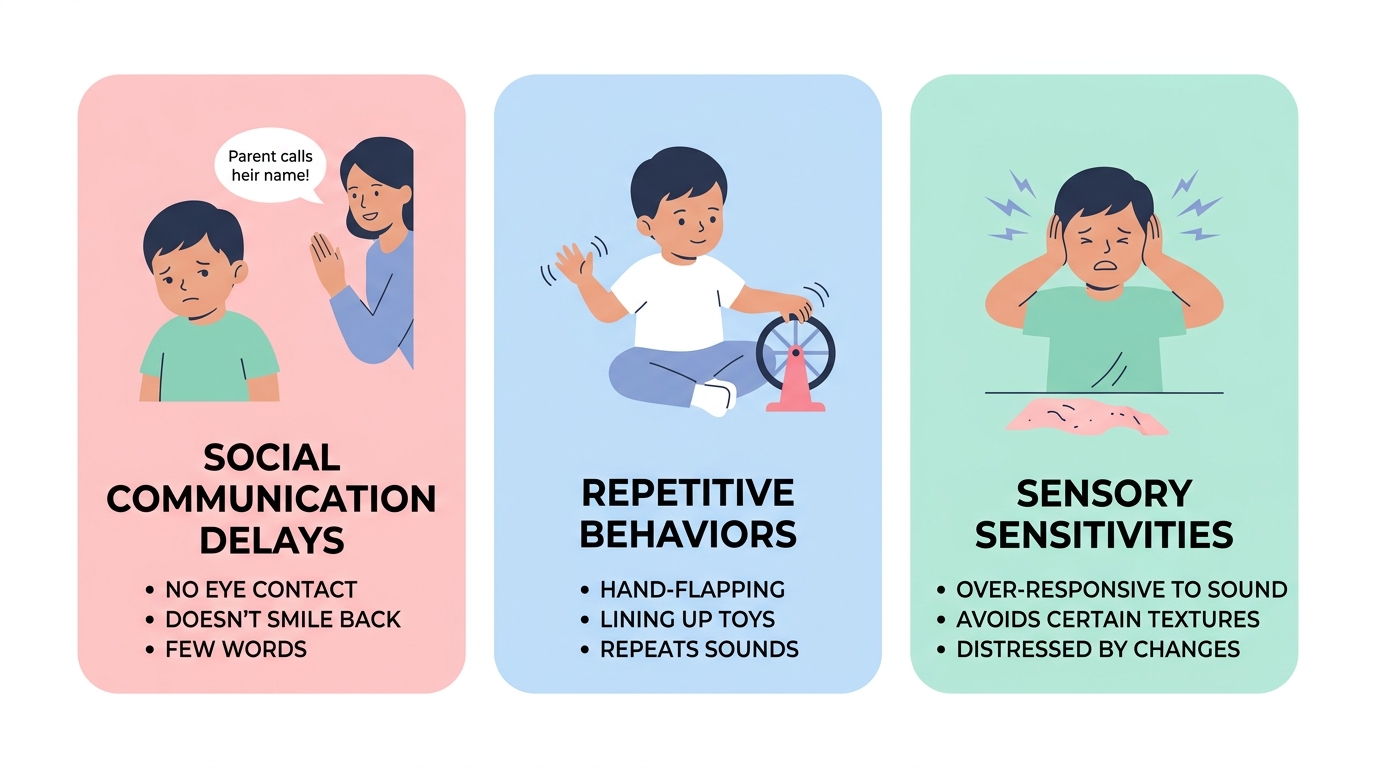
Table of Contents
- Understanding Early Signs of Autism: A Guide for Families
- Common Early Signs of Autism Spectrum Disorder
- When Do Early Signs of Autism Usually Appear?
- Recognizing Early Signs of Autism in Babies
- How to Identify Early Signs of Autism at Home
- Autism Symptoms in Toddlers and the Importance of Early Intervention
- Taking the Next Steps After Spotting Early Signs
Understanding Early Signs of Autism: A Guide for Families
Recognizing the early signs of autism is the first step toward getting your child the support they need. Many families first notice differences in their toddler’s social and communication skills.
Common early indicators include:
- Limited eye contact or not responding to their name
- Delayed speech or language milestones
- Repetitive movements like hand-flapping or rocking
- Difficulty with pretend play or sharing interests with others
- Intense reactions to sensory input or changes in routine
The American Academy of Pediatrics recommends that all children be screened for developmental delays at 9, 18, and 24 or 30 months, with autism-specific screening at 18 and 24 months. This proactive approach helps identify early signs of autism so families can access early intervention sooner. Early intervention autism services, rooted in evidence-based practices, can make a meaningful difference in a child’s development.
If any of these autism symptoms in toddlers feel familiar, we encourage you to talk with your pediatrician. We know noticing these differences can feel overwhelming, but you are not alone. We support families in Lakewood and surrounding areas as they take those first steps, and the next section will explore why early intervention matters.
This information is for educational purposes only and is not a substitute for professional medical advice.
Common Early Signs of Autism Spectrum Disorder
Spotting the early signs of autism can be one of the most important steps families take, as recognizing these potential indicators early helps children access support during critical developmental windows. While every child is unique, certain patterns may suggest a need for closer evaluation. NICHD research shows that many early signs can appear between 12 and 18 months and tend to cluster into social communication, repetitive behaviors, and sensory processing differences.
Understanding these autism early indicators does not provide a diagnosis, but it empowers caregivers to ask the right questions. Professional behavior analysts note that behavioral markers in early childhood are often subtle and variable, meaning that no single sign confirms autism. Instead, a collection of these observations over time may indicate a need for screening.
These signs often fall into three categories:
- In social communication: limited eye contact, lack of response to name, delayed babbling or speech, and reduced use of gestures like pointing.
- In repetitive behaviors: hand-flapping, rocking, lining up toys, and insistence on sameness.
- In sensory sensitivities: over- or under-reaction to sounds, textures, lights, or touch.
Each child may show a unique combination. For example, autism symptoms in toddlers might include not pointing to objects of interest or showing little interest in other children. Even subtle signs can be important, so observing how a child plays and connects with others over time is key.
The American Academy of Pediatrics recommends routine developmental screenings at 18 and 24 months and autism-specific screenings whenever concerns arise. Monitoring milestones alongside screenings helps families notice early signs of autism before they become more pronounced. If concerns persist, a comprehensive evaluation by a specialist is the next step.
Recognizing these signs opens the door to early support. When families partner with providers who offer compassionate, evidence-based therapy tailored to their needs, early intervention autism services can help children build vital skills. We believe in helping children thrive through personalized ABA therapy, and early intervention can set the stage for lasting progress.
Results may vary. Please consult a qualified healthcare professional for diagnosis and recommendations.
When Do Early Signs of Autism Usually Appear?
The early signs of autism often become apparent between 12 and 18 months of age, according to child health and development research conducted by the National Institute of Child Health and Human Development. Most parents first notice developmental differences by the time their child reaches age two. For some children, subtle indicators may emerge even earlier, between 6 and 12 months, while other children may not show clear signs until after their second birthday. Parents are often the first to notice these early differences, and their observations are an important starting point for discussion with a pediatrician.
The American Academy of Pediatrics recommends routine autism screening at the 18- and 24-month well-child visits to help identify early red flags. Screening is a quick, structured check—not a diagnosis—that helps determine whether further assessment would be beneficial. If the screening suggests possible developmental differences, the pediatrician may recommend a more comprehensive evaluation. Recognizing what many parents identify as autism symptoms in toddlers—such as differences in eye contact, response to name, or pretend play—can prompt a conversation with a pediatrician. When concerns are identified, accessing early intervention for autism offers children the chance to build foundational communication and social skills during a period when the brain is especially responsive to learning. Research suggests that early, targeted support can foster improvements in communication and adaptive skills, though each child’s journey unfolds differently.
Every child follows their own developmental path, and the presence of early signs does not automatically mean a diagnosis. A comprehensive evaluation by a qualified professional—such as a developmental pediatrician or a clinical psychologist—is needed to determine whether a child meets the criteria for autism spectrum disorder. We understand that noticing early differences may bring up many questions, and we are here to help families take the next step toward clarity and support. Individual development varies; consult a qualified professional for a personalized evaluation. Recognizing these early signs of autism is the first step toward assessment and, if needed, connecting with services that can support a child’s growth and well-being. We encourage families to trust their instincts and reach out for guidance when they have concerns—early action provides the best opportunity for support. Working with a professional team that includes pediatricians, psychologists, and behavior analysts can create a thorough picture of a child’s development.
Recognizing Early Signs of Autism in Babies
As we learn more about autism, noticing the early signs of autism in babies can open the door to timely support. While every child develops at their own pace, certain behaviors may signal a need for a closer look. Understanding these early indicators helps families take a proactive step—not a cause for alarm—toward getting the right guidance at the right time.
Common developmental red flags often emerge between 6 and 18 months and become clearer by age two. It’s important to remember that a single sign does not mean a child has autism, but a combination of several behaviors may suggest the value of a professional evaluation. Early identification does not mean a definitive diagnosis; rather, it opens the door to monitoring and early support if needed. By paying attention to these subtle differences, parents become better equipped to advocate for their child’s developmental needs. The professional behavior analysts association emphasizes that early behavioral observation and evidence-based screening are critical for connecting children with beneficial services.
Here are some early signs many parents notice:
- Limited or no eye contact
- Not responding to their name by 12 months
- Reduced social smiling or lack of joyful expressions
- Unusual play patterns, such as repetitive movements like hand flapping or spinning objects
- Delayed babbling or absence of cooing
These signs are not always indicative of autism, but when several appear together, they warrant a conversation with your child’s healthcare provider. Trust your instincts and don’t hesitate to seek professional guidance. This site provides educational information and is not a substitute for professional advice.
When autism symptoms in toddlers appear alongside missed milestones, it may be time to consult a pediatrician. We encourage families to view this conversation as an opportunity to gather information, not a verdict. Research shows that early intervention autism can lead to meaningful improvements in communication, social skills, and daily living. The earlier supports are introduced, the more a child’s natural ability to learn and connect can be fostered.
At Yes ABA Therapy, we see how recognizing these early signs empowers families. Our person-centered approach begins with listening to your observations and concerns. Our Board Certified Behavior Analysts design individualized programs that build on your child’s unique strengths. If you’ve noticed any of these red flags, we invite you to reach out—we have no waitlist, so support can begin quickly. Recognizing the early signs of autism is the first step toward support. Helping children thrive through personalized ABA therapy is the heart of what we do.
How to Identify Early Signs of Autism at Home
As we explored earlier, tracking your child’s developmental milestones is a valuable habit. Now we want to help you understand the early signs of autism so you can observe your child with greater clarity and take action if needed. Recognizing these clues early can open the door to meaningful support.
While every child grows at their own pace, a pattern of the following behaviors may suggest it’s time to seek a professional opinion. Keep in mind that a single trait does not indicate autism; it’s the combination and consistency of several signs that warrants attention:
- limited eye contact during play or feeding
- delayed babbling or speech relative to peers
- a reduced response to their name even when called clearly
- repetitive movements such as hand-flapping or rocking
- unusual reactions to sensory input (becoming upset by loud noises or certain fabrics)
Many families observe these early signs of autism in toddlers between 6 and 12 months, with the differences often becoming more noticeable by age two.
If you see these autism symptoms in young children, we encourage you to document what you’re seeing. A simple journal, video clips of playtime, or a log of when and how behaviors occur can give your pediatrician or a behavior specialist valuable information; even a few short clips can reveal patterns that might otherwise be missed. Remember, this guide is for educational purposes only; it does not replace a professional evaluation.
When the picture becomes clearer, early intervention autism services can make a profound difference. Helping children thrive through personalized ABA therapy starts with noticing these indicators early. If you notice these early signs, consider exploring in home ABA therapy in Montgomery County as a first step toward support. We’ll dive deeper into what that looks like in the next section, “Understanding In-Home ABA Therapy.” Many families in Montgomery County, including Rockville and Bethesda, find that early awareness makes a difference, and we’re here to help you take that next step with confidence. Support that helps your child grow with confidence begins with awareness, and our team is ready to walk with you.
Disclaimer: Results vary depending on individual circumstances, and this content is not a substitute for professional medical advice. Always consult a qualified healthcare provider or licensed behavior analyst for diagnosis and personalized recommendations.
Autism Symptoms in Toddlers and the Importance of Early Intervention
Recognizing the early signs of autism can empower parents to seek the support their child needs during the most critical developmental years. While every toddler develops at their own pace, certain autism symptoms in toddlers often emerge as early as 12 to 18 months of age, and pediatricians now recommend routine screening to ensure no milestone goes unchecked.
The most common early indicators of autism spectrum disorder can vary widely, but many families notice differences in social communication and behavior. These may include:
- Limited or fleeting eye contact during interactions.
- Delayed speech or a loss of previously acquired language skills.
- Not responding consistently when their name is called.
- Repetitive body movements such as rocking, spinning, or hand flapping.
- Intense focus on specific objects or parts of an object.
- An aversion to physical affection like cuddling or hugging.
Identifying these early detection of autism signs is crucial because a young child’s brain is uniquely adaptable. In these formative years, neural connections are being formed at a rapid pace, which is why early intervention autism care can make such a meaningful difference. Timely, evidence-based support can help toddlers improve their communication skills, build social connections, and navigate behavioral challenges. This early behavioral intervention focuses on meeting a child where they are, giving them the tools to thrive.
As a leading approach for early support, Applied Behavior Analysis, or ABA therapy, is recognized for its ability to help children build essential life and communication skills. Our philosophy is rooted in a person-centered, individualized model that honors each child’s unique needs, working closely with families to create a welcoming, collaborative path forward. We believe that beginning therapy early sets the stage for positive growth, and we offer convenient in-home ABA services in Montgomery County so children can learn where they feel most comfortable.
Getting started doesn’t have to be a waiting game. We offer ABA therapy no waitlist to help your child get started immediately, because prompt access to care is fundamental to effective early intervention. This means families can move from concern to action without unnecessary delay.
Disclaimer: Results may vary based on individual patient conditions and circumstances. Please consult a qualified healthcare professional or licensed behavior analyst for diagnosis and individualized treatment recommendations.
Taking the Next Steps After Spotting Early Signs
If you’ve noticed early signs of autism in your toddler—such as limited speech or reduced social engagement—you may wonder what comes next. It’s natural to feel concerned, but you’re not alone. Recognizing these early signs of autism is the crucial first step, and early intervention autism services can help your child develop important communication and social skills. Here are the immediate actions we suggest:
- Document the autism symptoms in toddlers you see and share them with your pediatrician.
- Schedule a formal developmental evaluation or autism screening with a qualified specialist.
- Contact a local ABA provider to discuss personalized, evidence-based support.
Our blog also highlights mindfulness counseling and mental health workshops as helpful complements to professional evaluation. For families seeking individualized care, person centered ABA therapy in San Diego represents a model that puts your child’s unique needs at the center. At Yes ABA Therapy, we offer similarly tailored programs with BCBA supervision and no waitlist, so you can begin therapy without delay. With our no-waitlist approach, you can start therapy soon after the evaluation concludes. The next section walks you through the evaluation process step by step.
Please remember that early signs do not confirm a diagnosis, and this content is educational. Always consult a licensed healthcare professional or behavior analyst for personalized advice. Individual outcomes vary.
Resources
- Find In-Home ABA Therapy in Montgomery County
- Get Person-Centered ABA Therapy in San Diego
- Discover ABA Therapy Providers in Montgomery County
- Learn About In-Home ABA Therapy in Montgomery County
- Find Mindfulness Counseling Resources in San Diego
- Explore Mental Health Workshops in San Diego
- Learn About NICHD Research on Child Health and Development
- Learn About the Association of Professional Behavior Analysts
- Discover Resources from the American Academy of Pediatrics